
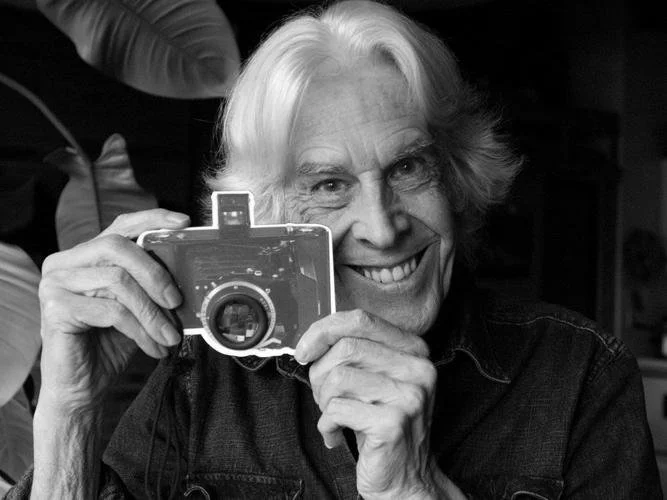
Barrie Wentzell
Born on May 25th, 1942 in Durham, northern England, Barrie was educated in Kent and London, attending Maidstone Art School in Kent in the late 1950’s. His first job at Manhattan Displays on Greek Street in London’s Soho occupied him from 1959 to 1961, during which time he became an avid scrabble player under the tuition of author, performer, wit and philosopher, Quentin Crisp. He continued to work at Color Applications, a photo studio in the Belgravia area of London learning photography basics from 1961 to 1962. It was then, upon meeting his soon to become mentor, photojournalist Maurice Newcombe, that he would be inspired to pursue a photographic career of his own.
During the early 1960’s, Barrie began diversifying into the worlds of fashion, music and advertising. In 1965 he had a chance encounter with the young Diana Ross. The image he made of this yet-to-be global super-star became a riveting front cover of The Melody Maker, England’s most renowned music publication, which caught the attention of Bob Houston, the assistant editor at the time. Houston was to contact Barrie and sign him on as exclusive chief photographer for the paper.
Barrie went on to shoot for the Melody Maker from 1965 until 1975, one of the most important decades in the history of popular music, photographing many unknown musicians who would later become legends and household names.
Staff Picks
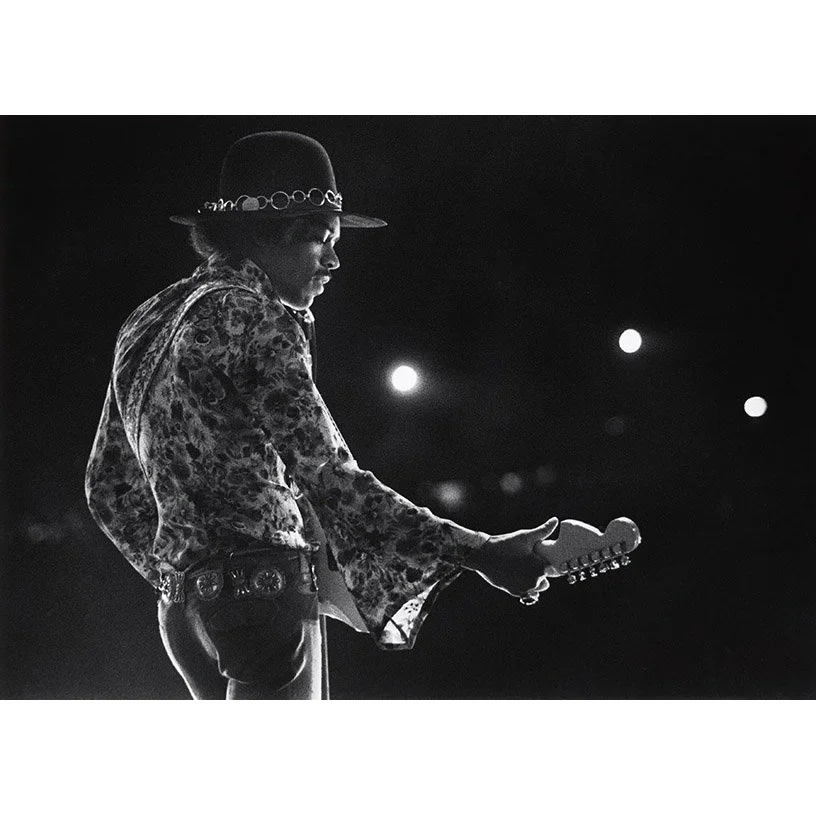
Jimi Hendrix taken by Barrie Wentzell, live at the Woburn Music Festival, Woburn UK, 6th July 1968.
The July 1968 Woburn festival was the third time that Hendrix had played in Bedfordshire. In 1967 he had given a concert on 11th April at the Granada Cinema in Bedford and on 28th October at the California Ballroom in Dunstable. However, at the Woburn concert, Hendrix played to real crowds, unlike the previous year in Dunstable when he was just at the edge of his great fame and the audience was much smaller.
You can add framing to your print purchase if needed, or simply order the print unframed. Our framing service is provided by a reputable, local professional custom framer here in Austin. Prints are framed in a classic museum style frame using archival techniques. This consists of a 3" white matt, plain black wood surround and conservation clear, UV protected glass. Click HERE to view a sample.
Scroll down for further information.
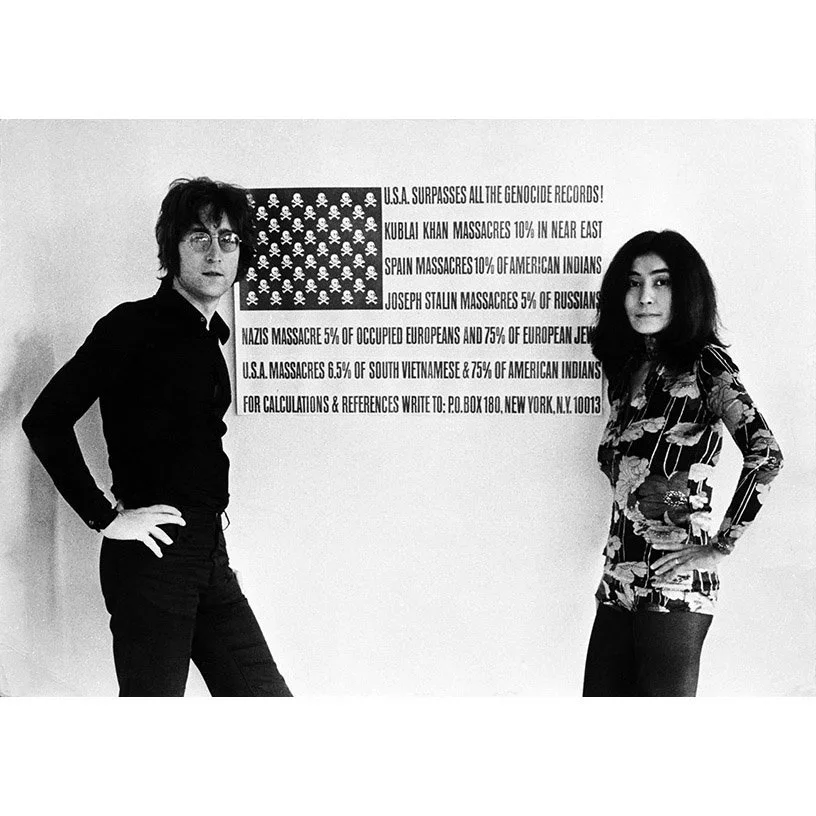
John Lennon & Yoko Ono taken outside the white room of their home in Tittenhurst, Ascot, UK in 1971.
Barrie Wentzell recalls, "I visited John and Yoko one afternoon accompanying a foreign news reporter. Yoko had just published a book called “Grapefruit” and John was standing shoulder to shoulder with her fielding press and publicity duties. We spent a long time in their kitchen during the interview while the laundry was running, the food was cooking and the kettle was whistling. John and Yoko were exploring ideas and plans for making a better world. Afterwards they showed us their “White Room” and John specifically requested me to take this picture. At first glance it just appeared to be a mural of the American flag but when I realized what it was really about I became a bit apprehensive. John had mentioned earlier that they were thinking of moving to New York and were planning an anti ‘Tricky Dickie’ aka Nixon tour. I protested but he insisted. John was inspirational, showing great courage and conviction in his and our pursuit of “Giving Peace a Chance”!
Scroll down for further information.
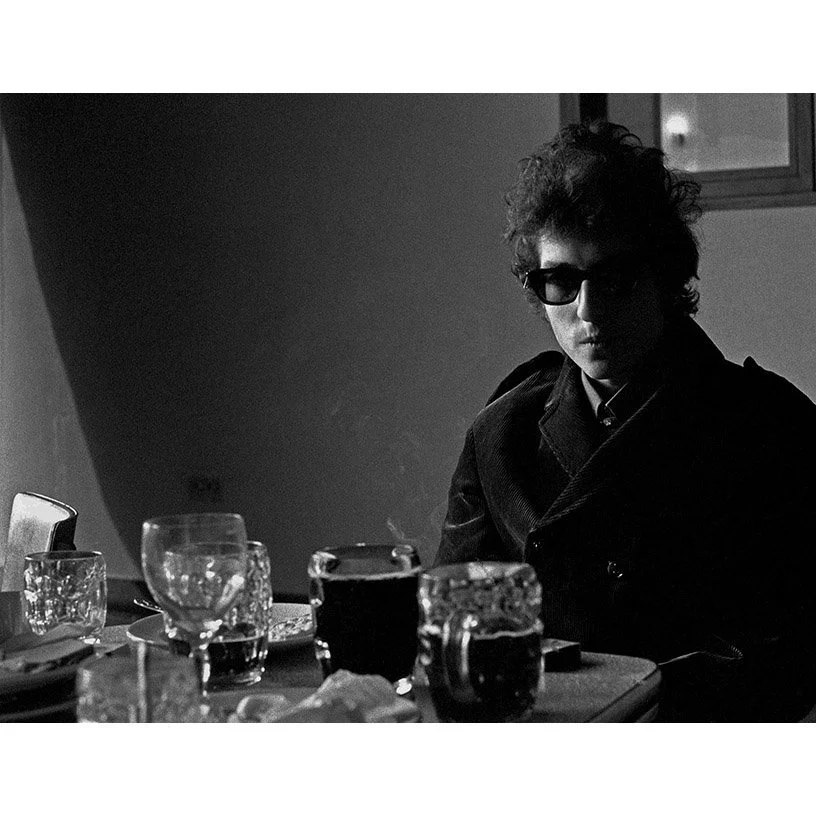
Signed limited edition silver gelatin print of Bob Dylan, taken by Barrie Wentzell at the BBC Studios, London, 1st June 1965.
Bob Dylan relaxing during the recordings for his BBC concert on 1st June 1965. Barrie Wentzell recalls, "He was hanging-out during a break from rehearsals so I asked if I could shoot some pictures and in his very Bob way wearing a big smile he said, “You can shoot yourself if you want to…sure it’s cool, carry on” he said so I did. I later snuck in and photographed the rest of the rehearsal unimpeded. That evening I went along to see the show in a small studio with only about 100 others. A unique, intimate and wonderful time was had by all."
Scroll down for further information.
BARRIE WENTZELL Print Information
Prints are hand signed and numbered by Barrie Wentzell and further authenticated with his embossed studio stamp and an accompanying certificate of authenticity. Available in four sizes, each with a limited edition of 50.
11” x 14”
16" x 20"
20" x 24"
30" x 40"
NOTE: Measurements quoted are paper size, with the printed image being slightly smaller to create a natural border to house the photographer’s signature and edition number