 Image 1 of 1
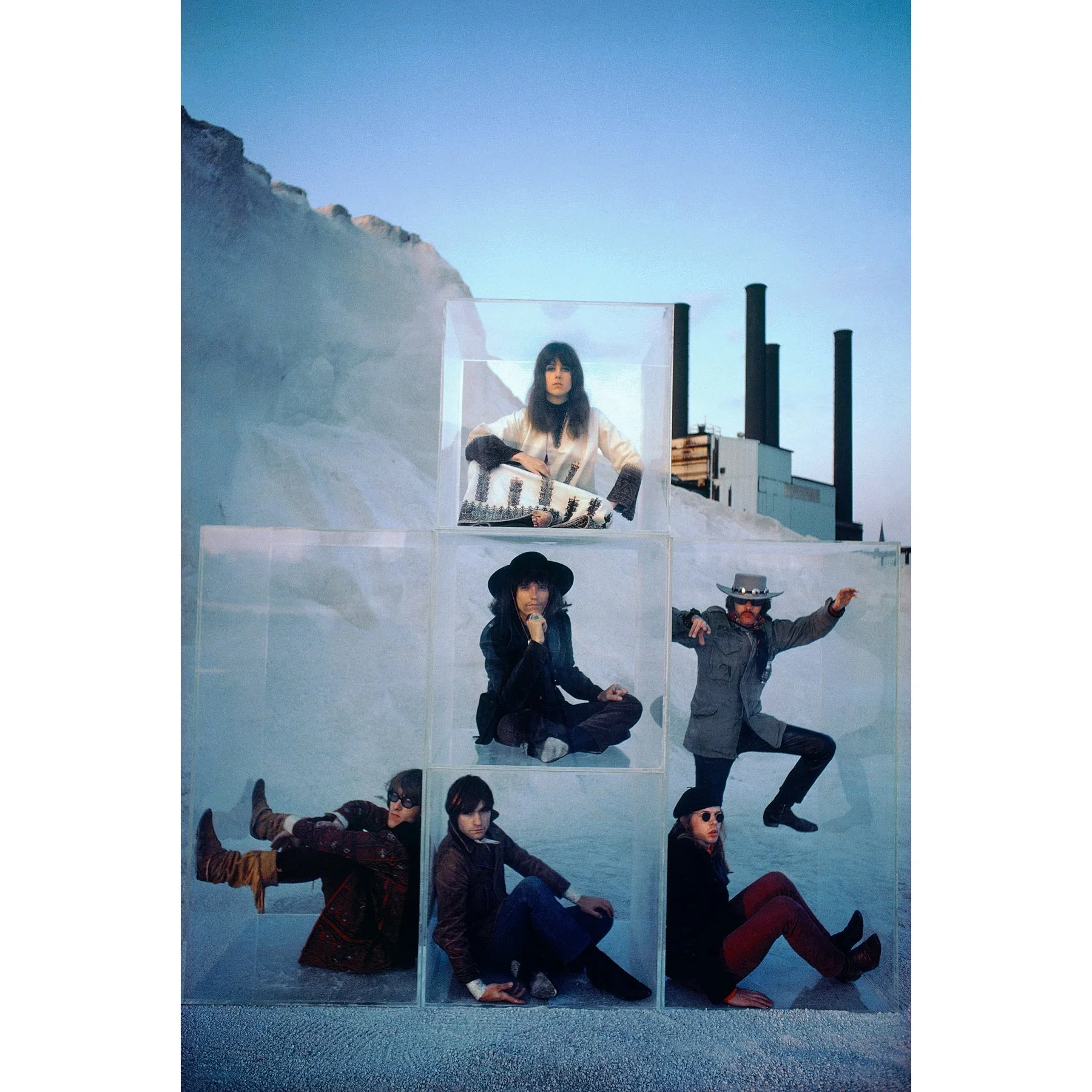
Taken for the cover of Life Magazine, Jefferson Airplane, 1968 by Art Kane
Art Kane pioneered the art of conceptual portraiture. He didn’t photograph artists doing their thing, he photographed them doing HIS thing. Kane summed up his approach to photography with this statement: “Performance shots are a waste of time, they look like everyone else’s. If you want to shoot a performer, then grab them, own them, you have to own people, then twist them into what you want to say about them.”
Like all his subjects, he immersed himself in their music to develop his concept. In the case of Jefferson Airplane, he saw flight as a defining principle of their approach. He designed the plexiglass cubes to stack the band in to create the illusion of flying, and also to reference the visual metaphor of acid rock with these large sugar cubes of acid. The plexi cubes cost $3000 to make, a fortune for an editorial shoot in 1968, but Kane was able to command it. The photograph was taken in Queens, NYC, just south of the 59th street bridge and across the East river from the United Nations, at a gypsum factory that lends a bizarre and almost lunar landscape.
Taken for the cover of Life Magazine, Jefferson Airplane, 1968 by Art Kane
Art Kane pioneered the art of conceptual portraiture. He didn’t photograph artists doing their thing, he photographed them doing HIS thing. Kane summed up his approach to photography with this statement: “Performance shots are a waste of time, they look like everyone else’s. If you want to shoot a performer, then grab them, own them, you have to own people, then twist them into what you want to say about them.”
Like all his subjects, he immersed himself in their music to develop his concept. In the case of Jefferson Airplane, he saw flight as a defining principle of their approach. He designed the plexiglass cubes to stack the band in to create the illusion of flying, and also to reference the visual metaphor of acid rock with these large sugar cubes of acid. The plexi cubes cost $3000 to make, a fortune for an editorial shoot in 1968, but Kane was able to command it. The photograph was taken in Queens, NYC, just south of the 59th street bridge and across the East river from the United Nations, at a gypsum factory that lends a bizarre and almost lunar landscape.